Refractories & High Temperature
Insulation Materials

Refractories & High Temperature Insulation
Vitcas is a global manufacturer of finest quality refractory products and high temperature insulation material, preserving Bristol’s tradition of refractory and heat resistant manufacturing since 1882.
Vitcas products include a range of refractory setting mortars and cements, fire cement, fire bricks, plastic mouldables and refractory castables, zircon refractories, acid resistant cements, high temperature textiles and insulation jackets.These products can be utilised in a number of industries such as the petrochemical industry, aerospace, renewable & non-renewable energy, ceramics industry, metallurgical industry, sugar refineries and the glass industry.

History
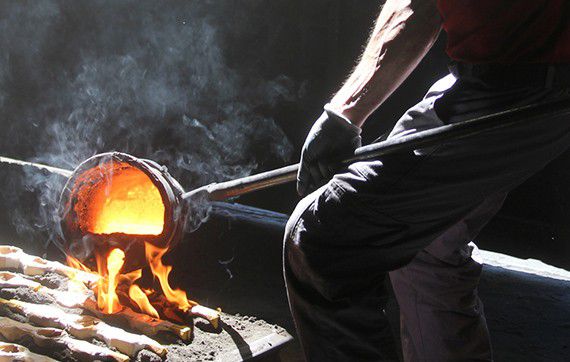
Bristol has been a thriving centre for trade and commerce for many hundreds of years, exporting and importing with the Commonwealth, Europe and the Americas. The exchange of goods is often accompanied by the exchange of ideas which in turn stimulate rapid innovation in all areas of economic activity. Fire cement is thought to have been first manufactured in Bristol in 1882. Furthermore, with the Industrial Revolution and the invention of the blast furnace, the demand for refractory materials has increased.
Vitcas has maintained Bristol’s long tradition, by being the international and transatlantic manufacturer and trader of high temperature refractory products. Starting with the best of the traditional formulations and incorporating new discoveries and techniques where they offer improvements, we have developed a comprehensive range of refractory products including castables, mouldables, cements and mortars to meet the needs of modern industries.
Vitcas has maintained Bristol’s long tradition, by being the international and transatlantic manufacturer and trader of high temperature refractory products. Starting with the best of the traditional formulations and incorporating new discoveries and techniques where they offer improvements, we have developed a comprehensive range of refractory products including castables, mouldables, cements and mortars to meet the needs of modern industries.
Quality Assurance
We set ourselves the highest standards throughout our business so that we consistently provide products that meet the needs of our customers. We engage closely with our customers so that we fully understand the performance they require and can provide the appropriate solution.
Cost Effectiveness
We want to help you find the right solution for your project and that means working hard to minimise costs, of both production and transport, while maintaining the quality that will deliver the performance you need.Timely Delivery & Reliability
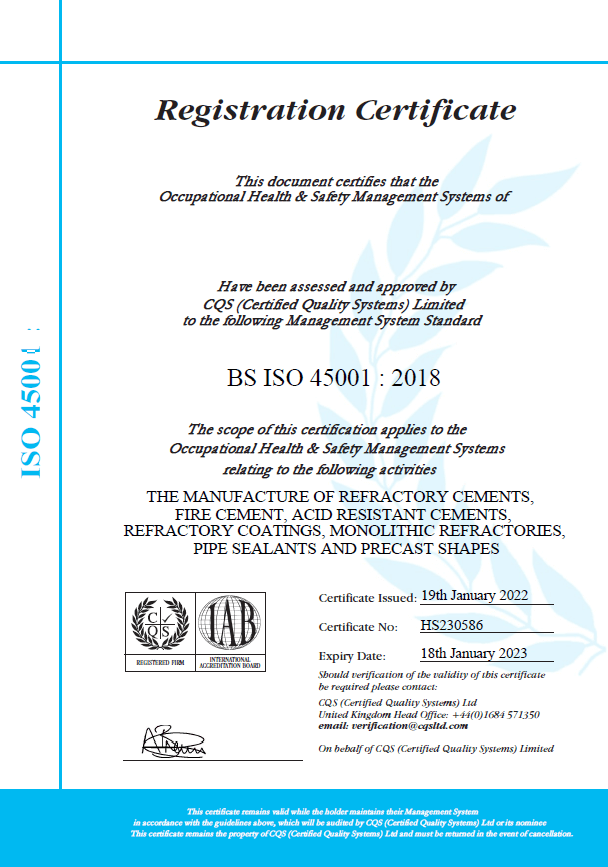
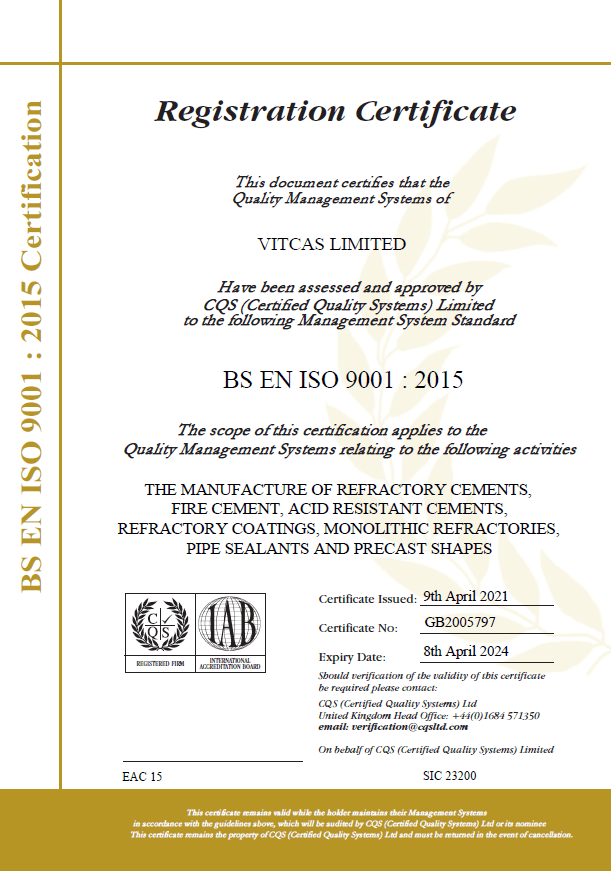
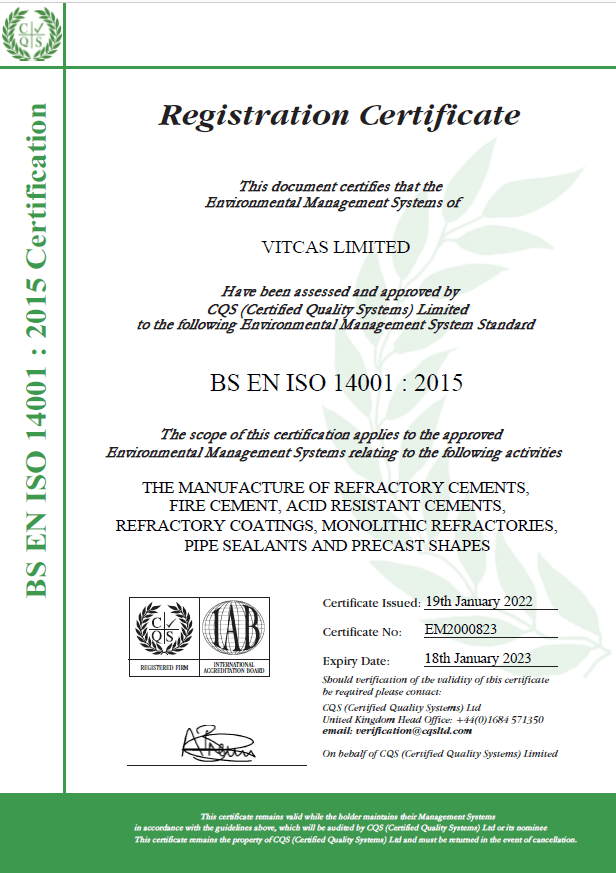
We understand that receiving the correct products on time can be critical for our customers, so we hold ourselves to the highest standards when it comes to timely delivery and reliability. We have worked hard to establish a comprehensive Quality Management System which has been certified as meeting the requirements of BS EN ISO 9001:2015. This commits us to a continuous process of improvement whereby we are always looking for ways to enhance our products so they continue to meet the needs for refractory and insulating materials in a wide range of industries and to increase the efficiency of our manufacturing processes while refusing to compromise on quality and reliability.
Certifications